

Your visual brand guide covers logos, fonts, and colors. But AI platforms like Claude, ChatGPT, Perplexity, and Google AI Overviews do not read your just your brand tagline. They read your digital footprint, and they decide how to describe you to millions of potential customers every day.
An AI Brand Blueprint picks up where traditional brand guides leave off. It translates your brand identity into the structured language that AI systems understand, ensuring you show up accurately and consistently across the platforms reshaping how people discover businesses.
WHO Digital Strategy developed the AI Brand Blueprint as an extension of our entity-based SEO methodology. Where traditional brand guides define how your business looks, the AI Brand Blueprint defines how AI systems classify, retrieve, and recommend you. It is built on Entity-Attribute-Value frameworks that align your digital presence with how Google Knowledge Graph, large language models, and answer engines organize information.
AI Platforms Now Shape Brand Discovery
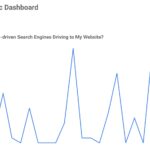
The way people find businesses has changed. Traffic from AI platforms like ChatGPT, Gemini, Claude, and Perplexity grew 527% year-over-year in 2025, while traditional organic search grew less than 4%. OpenAI reports ChatGPT now reaches over 400 million weekly users, and Google AI Overviews appear in responses across more than 200 countries and territories.
When a potential customer asks an AI assistant about services in your industry, the AI synthesizes information from multiple sources and delivers a conversational answer. Your brand either appears in that answer or it does not. There is no page two to scroll through.
Search engine volume continues to drop as users shift to AI chatbots. For businesses that rely on being found online, this creates both risk and opportunity.
Choose the Right Package for Your Business
| AI Brand Blueprint | Semantic Authority Framework | Semantic Authority Suite |
| Get found by AI. Get understood by everyone. | Own your niche. Build lasting topical authority. | Align your brand. Scale your semantic presence. |
| $1,500 | $2,500 | $4,500 + $1,500 for each sub-framework |
| For small businesses that want to show up in AI-powered search and be understood the way they actually work. You will get a clear, structured guide that defines your brand’s core identity and key entities so AI systems, search engines, and your marketing team are all on the same page. | For growing businesses ready to build real topical authority in their market. Includes everything in the AI Brand Blueprint, plus deeper competitive research, semantic entity mapping, and channel-specific content examples to help your team create content that consistently signals expertise. | For multi-brand and enterprise organizations that need strategic semantic alignment across business units. Includes a master AI Entity Framework plus individual frameworks for each product line or sub-brand, built to scale with stakeholder discovery and implementation guidance throughout. |
| Includes a recorded walkthrough and 2-3 hours of implementation guidance. | Includes semantic triples, expanded channel examples, and extended implementation guidance. | Includes sub-framework pricing tiers based on number of business units or product lines. |
AI Systems Understand Entities, Not Keywords
Traditional SEO focused on keywords. AI systems work differently for AEO. They organize knowledge through entities: the people, brands, products, and concepts that form the backbone of their knowledge graphs. Search Engine Land describes entities as the atomic units of meaning in modern search ecosystems.
When AI platforms answer questions about your industry, they look for brands they can confidently identify and describe. This confidence comes from clear entity signals: consistent naming, defined relationships, and unambiguous attributes across your digital presence. This includes information on your website, social channels, user generated content, discussion sites and apps, reviews, videos and more. Building a consistent corroboration of trust signals for your brand is now table stakes for online market share.
If your brand signals conflict, if your LinkedIn description says something different than your website, if your service categories vary across directories, AI systems lose confidence. They either describe you inaccurately or skip you entirely.
Source Context and Semantic HTML Reinforce Entity Signals
AI systems do not read your website the way a human does. They parse semantic HTML structure, source context, and the relationships between concepts on your pages. When your heading hierarchy, page structure, and content all reinforce the same central identity, classifiers build confidence in what your brand represents. When they conflict, that confidence drops.
Corroboration across multiple sources compounds that confidence. Your website, Google Business Profile, LinkedIn, and industry directories each contribute signals. The AI Brand Blueprint documents your central identity and source context so every channel tells the same story, in language that AI systems are built to understand.
An AI Brand Blueprint Defines Your Digital Entity
The AI Brand Kit establishes your brand as a recognized entity that AI platforms can reliably cite and recommend. It includes several core deliverables that work together to create clarity across AI and digital systems.
Topical Authority Map Establishes Your Knowledge Domain
The topical authority map defines your central entities and source context. It identifies what your brand is fundamentally about and how that connects to the topics and categories AI systems use to organize information. This map becomes the foundation for all content and communications. The AI Brand Blueprint is the foundation for your Topical Map.
For a B2B technology company, the central entity might be the specific problem you solve, with source context linking that to your methodology, customer outcomes, and industry position. Every piece of content then reinforces these connections.
Semantic Relationships Connect Your Brand to Relevant Topics
LLMs process information through relationships between concepts. The AI Brand Kit documents the semantic relationships that position your brand within its knowledge domain. These relationships follow subject-predicate-object patterns that AI systems naturally understand.
For example, if your company provides contract management software, the semantic relationships might connect your brand to entities like legal compliance, workflow automation, and enterprise procurement. Each relationship strengthens your visibility for related queries.
Entity Attributes and Values Define Your Differentiators
Beyond basic descriptions, the AI Brand Guide specifies the attributes and values that distinguish your brand. LLMs retrieve passages, not pages. They look for information gain with verified statistics, mentions, and values. Content with clearly defined entity attributes is more likely to be selected for AI-generated answers.
These attributes cover your service categories, target markets, geographic focus, methodology, certifications, and key differentiators. They provide the specific, verifiable details that AI systems need to recommend you with confidence.
Boundaries Prevent Brand Drift
Equally important to defining what your brand is: defining what it is not. The AI Brand Guide establishes boundaries that prevent your brand from being associated with incorrect categories, unsuitable audiences, or competing concepts. Too much educational content on your site? AI decides you are a how-to site instead of providing the services or products you were trying to educate. Positioning for topical authority plus searcher intent require a clear understanding of classifiers.
These boundaries ensure that as AI systems learn about your brand over time, they maintain accurate associations rather than drifting into irrelevant or inaccurate territory.
Consistent Signals Build Trust Across Platforms
An AI Brand Guide is not a document that sits on a shelf. It becomes the reference point for every digital touchpoint. When brand signals are consistent across sources, AI systems can categorize and reference your brand with greater confidence. When they conflict, confidence drops.
This consistency extends across your website, Google Business Profile, LinkedIn, industry directories, press mentions, and partner content. Each source either reinforces or confuses how AI platforms understand you. Your AI Brand Guide keeps your teams focused.
Our methodology draws on established semantic SEO frameworks, including the topical authority principles developed by Koray Tugberk Gubur at Holistic SEO and the Relevance Engineering approach documented in the AI Search Manual by Mike King and the team at iPullRank. These frameworks inform how we map entity relationships, structure source context, and build topical authority for clients across Central Texas and beyond.
Where keyword-focused SEO chased rankings page by page, entity-based SEO and AEO build lasting visibility by establishing your brand as a recognized authority within its knowledge domain. That visibility extends across traditional search, Google AI Overviews, Claude, ChatGPT, and the growing ecosystem of AI-powered discovery tools.
What You Receive in Your Custom AI Brand Blueprint
The custom built-for-you AI Brand Guide delivers practical playbooks you can use immediately and build upon over time:
- A complete topical authority framework with defined entities, search intents, and source contexts
- Documented semantic relationships using subject-predicate-object triples
- Entities, attributes, and values structured for AI comprehension
- Boundary definitions clarifying what your brand is not
- Implementation recommendations for your website and key platforms
- Current share of voice analysis showing your AI visibility baseline
This becomes the foundation for content creation, social media, PR, and all marketing communications. It ensures every channel reinforces the same entity signals.
Built for Businesses, Nonprofits, and Growing Brands
The AI Brand Blueprint is built for brands of any size. For small and medium-sized businesses and nonprofits that rely on being found online but do not have the internal resources to navigate the shift to AI-driven search. It gives your marketing team a clear reference point for every channel, so content decisions are consistent without requiring deep technical knowledge.
For mid-market and enterprise organizations managing multiple product lines or sub-brands, the Semantic Authority Framework and Semantic Authority Suite provide the same semantic foundation at scale, with sub-frameworks for each distinct business unit.
WHO Digital Strategy is based in Fredericksburg, Texas, serving businesses, wineries, luxury hospitality venues, and nonprofits across Texas Hill Country and nationally.
One Marketing Project, Lasting Impact
The AI Brand Blueprint is typically a one-time project that establishes your foundation. For clients who work with us on ongoing SEO or content management, it becomes the reference that guides all work. It can be repeated when you launch new products or services that need their own entity definition.
Whether your brand already appears in AI answers or you want to get ahead of competitors, the AI Brand Blueprint ensures AI platforms describe you accurately, recommend you appropriately, and include you in the conversations that drive business decisions.
Ready to make your brand visible where your customers actually search? Schedule your AI Brand Blueprint consultation to discuss how your brand and entities will show up in the conversations with AI agents.

What Can We Do For You
Really, we’d love to chat. Don’t by shy.